

She Runs Toward The Hard Things | Inside the Discipline, Solitude, and Strength That Define Cat Bradley's Approach to Endurance
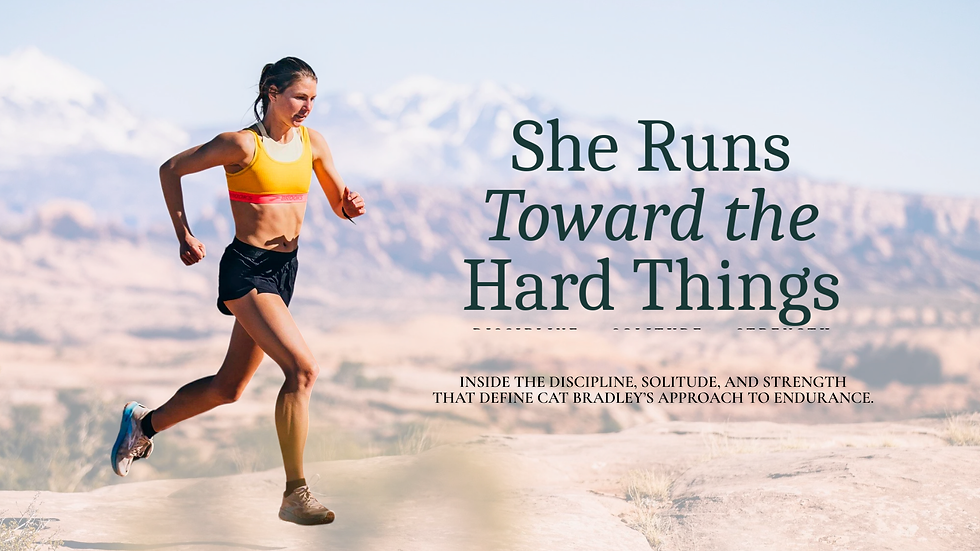
The Gulf in late summer has a particular quality of light. It arrives sideways in the early morning, low and golden, turning everything it touches quieter than it actually is. There is a stillness to that hour that most people never see, because most people are still asleep.
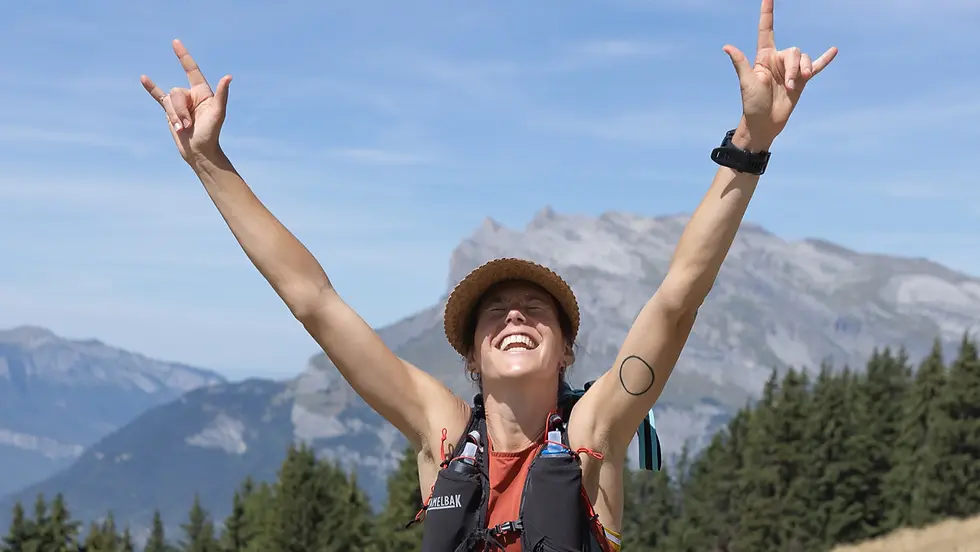
Cat Bradley is not most people.
By the time that light appears, she has already been moving. Not because she has to. She runs because it is the most honest thing she knows how to do. Because the miles have a way of clarifying what everything else obscures.
Bradley is an ultramarathon runner who regularly covers distances that make the body negotiate seriously with the mind: fifty miles, one hundred miles, mountain trails that rise and fall without apology. She has won some of the most demanding races in the country, including the Western States 100. She did it with a composure that quietly distinguished her from athletes who celebrate louder.
“The discipline is invisible right up until it produces something undeniable.”
THE DISCIPLINE OF CHOOSING HARD
What draws someone to endurance is rarely what keeps them there. People begin running for the usual reasons. But the ones who stay, who keep showing up before dawn and choose discomfort over convenience, are usually working something out that has little to do with fitness.
Bradley was not always someone who ran toward difficulty. Like many women who find their footing in something demanding, she spent time learning what she actually wanted rather than what seemed reasonable to want. Running became the place where she could ask that question honestly.
Research on women in endurance sport
reflects this pattern consistently. Women
who train at distance report higher
rates of mental clarity and a stronger
sense of identity. The body learns, over
long miles, that it can handle more
than it thought.
WHAT SOLITUDE TEACHES
Hours on a trail without music or
conversation will eventually produce
something. It might be discomfort. It
might be clarity. Usually both arrive
together, the way they tend to in real life.
Bradley has described the mental
architecture of a long run in terms that
go well beyond sport. There is a point somewhere past mile forty where the internal chatter quiets and something more essential takes over. She does not romanticize it. But she does not diminish it either. It is, she has said, the clearest she ever feels.
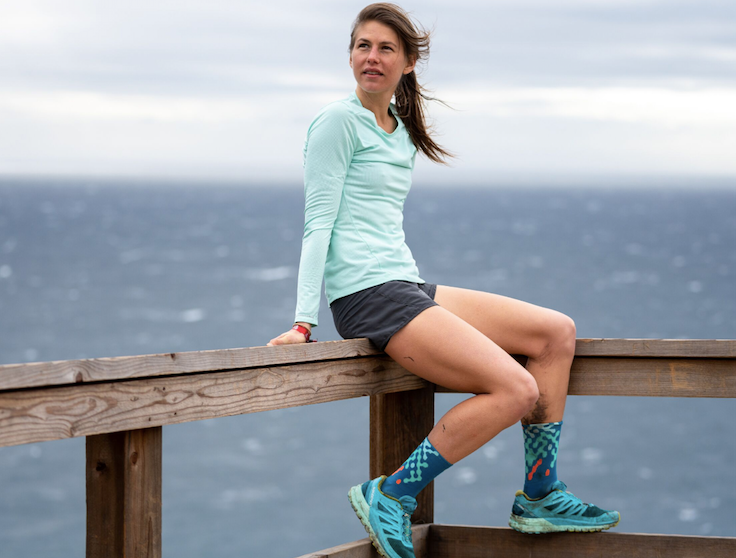
Along the Gulf Coast, where the landscape invites a certain contemplative quality, this resonates differently than it might elsewhere. There is room here to think. And for women willing to take that space seriously, there is real power in it.
THE FRAMEWORK UNDERNEATH
What Bradley has built is not just a racing career. It is a framework for living inside difficulty without being consumed by it. She trains consistently, not dramatically. She does not rely on motivation because she understands that motivation is unreliable. She relies on structure, on showing up whether or not she feels like it, on the accumulated trust that comes from keeping small promises to herself over time.
Cat Bradley did not win Western States because she was the fastest woman on the mountain that day. She won because she had practiced being uncomfortable so many times that discomfort no longer had the power to stop her.
“She does not perform resilience. She simply exhibits it, in the way she absorbs a difficult race, in the way she does not require an audience to keep going.”
WHAT THE MILES ACTUALLY MEAN
The most interesting thing about Cat Bradley is not the medal or the finish line. It is the choice she keeps making every morning before the rest of the world is awake. The choice to go out anyway. To cover the miles that no one will see. To find out, again and again, what she is made of when there is no reward waiting at the end.
That kind of consistency does not announce itself. It simply accumulates. And over time, it becomes the thing that everything else is built on.
The Gulf light comes early and it does not wait. Neither does the kind of woman who decides, once and quietly, that she would rather move toward the hard thing than away from it. There is no dramatic moment of transformation in that choice. There is just the running. And then, eventually, everything it built.
Photos courtesy of Google Images.
Coastalpolitan Magazine | 2026 FEB-MAR



Comments